

Johns Creek Landscape Services
Sign up now for autumn service and enjoy a vibrant, worry-free yard all season long!
Get a Free QuoteLandscape Services Tailored for Johns Creek, Georgia
Expert Lawn Care for Johns Creek’s Unique Environment
Johns Creek’s residential landscapes face a blend of challenges shaped by the area’s humid subtropical climate and diverse geography. Homeowners in neighborhoods like Medlock Bridge and Rivermont often contend with summer drought stress, which can leave lawns parched and patchy without attentive irrigation. The city’s mature tree canopy, especially near Newtown Park and along the Chattahoochee River, creates shaded lots that require specialized turf and plant selections to thrive in lower light. Additionally, sloped properties common in the area are prone to soil erosion during heavy rainfalls, demanding tailored solutions for stabilization and drainage. Winter road treatments can introduce salt exposure, impacting curbside grass and plantings. For more information about local parks and community resources, visit the official Johns Creek website.
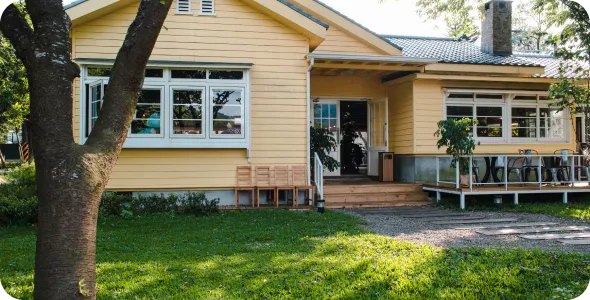
Our Johns Creek Landscaping & Yard Care Services
Johns Creek Gardening Services
Johns Creek Yard Clean Up
Why Choose Johns Creek Landscape Services


Johns Creek Homeowners Trust Us
-
Expert Lawn Maintenance
-
Reliable Scheduling
-
Competitive Pricing
-
Professional Team
-
Satisfaction Guarantee
-
Personalized Service
Contact Your Local Johns Creek Public Works or Solid Waste Department for Green Waste Info
Johns Creek, located in northern Fulton County within the Metro Atlanta Piedmont region, relies on contracted residential curbside collection for yard waste. Grass clippings, leaves, small branches, and hedge trimmings should be placed in personal containers or kraft paper bags—plastic bags are typically prohibited. Limbs must be cut to manageable lengths and bundled. Residents can confirm pickup schedules and storm-debris protocols through the city's Public Works Division. Commercial landscapers must use approved disposal facilities and may not utilize residential curbside service. Blowing or dumping clippings, leaves, sediment, or fertilizer granules into streets, storm drains, gutters, or streams is strictly prohibited under the Clean Water Act and local MS4 stormwater permits. Grasscycling—leaving clippings on the lawn—reduces waste volume and returns nutrients to Piedmont clay soils.
Johns Creek Public Works Department
11360 Lakefield Drive, Johns Creek, GA 30097
Phone: (678) 512-3200
Official Website: Johns Creek Public Works Department
Lawn Care Regulations & Permits in Johns Creek, GA
All commercial pesticide applicators working in Johns Creek must hold valid licenses under the Georgia Pesticide Use and Application Act of 1976 and the Georgia Pesticide Control Act of 1976, verified through Georgia Department of Agriculture - Search for Pesticide Applicators. Fertilizer products are regulated at the state level under the Georgia Fertilizer Act of 1997, though local stormwater ordinances and HOA covenants may influence application timing and runoff-prevention practices. Outdoor watering in Johns Creek follows statewide conservation rules outlined by Georgia Water Conservation, including odd/even address schedules and time-of-day restrictions. The city enforces noise ordinances limiting powered equipment operation in residential areas, typically before 7:00 a.m. and after 9:00 p.m. on weekdays. Commercial operators must maintain a valid occupation tax certificate with the City of Johns Creek, carry liability insurance, and ensure vehicle and trailer compliance.
Georgia Department of Agriculture
19 Martin Luther King Jr. Drive SW, Atlanta, GA 30334
Phone: (404) 656-3600
Official Website: Georgia Department of Agriculture
Johns Creek Community Development Department
11360 Lakefield Drive, Johns Creek, GA 30097
Phone: (678) 512-3200
Official Website: Johns Creek Community Development Department
What Neighborhoods Do We Serve in Johns Creek, GA?
Johns Creek's suburban Piedmont landscape features red clay and clay-loam soils, mature hardwood canopies, and HOA-governed subdivisions with high curb-appeal expectations. Each neighborhood presents distinct lawn care challenges:
- St. Ives Country Club — Large estate lots with significant tree canopy create heavy shade stress on tall fescue; clay compaction limits infiltration on sloped fairway-adjacent properties
- Country Club of the South — Upscale zoysiagrass and bermudagrass lawns require precise mowing heights; proximity to the Chattahoochee River corridor demands strict stream-buffer compliance and runoff prevention
- Shakerag / Shakerag Trail — Established neighborhoods with mature pines and hardwoods; acidic clay soils benefit from lime applications guided by UGA soil testing; shade thinning is common
- Abbotts Bridge / Medlock Bridge Area — Mixed-age subdivisions with compacted builder-grade fill soils; poor drainage and weed invasion in bermudagrass and fescue lawns are prevalent
- Rivermont / River Club — Properties near Johns Creek and the Chattahoochee feature alluvial soils and flood-prone low spots; stormwater pond proximity requires careful fertilizer placement
- Thornhill / Foxdale — Mid-density neighborhoods with moderate lot sizes; clay compaction and brown patch in tall fescue are primary concerns during humid summers
- Findley Oaks / Bellmoore Park — Newer master-planned communities with HOA landscape standards; recently disturbed soils need aeration and organic amendment to improve structure
Partnering With Johns Creek's Stormwater, Environmental, or Sustainability Office
Johns Creek's stormwater management program operates under MS4 permit requirements aligned with Georgia EPD - Municipal Stormwater and Georgia EPD - Stormwater. The city's watershed falls within the Chattahoochee River basin, making creek and detention-pond protection critical. Sustainable lawn care practices that support stormwater quality include:
- Proper mulching around beds to reduce sediment movement on clay slopes
- Compost topdressing to improve infiltration in compacted Piedmont soils
- Rain garden installation to capture roof and driveway runoff
- Native plant integration along stream buffers and drainage swales
- Grasscycling to reduce waste and return organic matter to clay-heavy turf areas
- Erosion-aware planting on graded subdivision slopes
Coordination with the Georgia Soil and Water Conservation Commission - Urban Erosion & Sediment Control ensures land-disturbing activities meet state standards.
Johns Creek Stormwater Management Division
11360 Lakefield Drive, Johns Creek, GA 30097
Phone: (678) 512-3200
Official Website: Johns Creek Stormwater Management Division
Georgia Environmental Protection Division
2 Martin Luther King Jr. Drive SE, Suite 1456 East, Atlanta, GA 30334
Phone: (404) 656-4713
Official Website: Georgia Environmental Protection Division
Top Johns Creek Lawn Problems (and How We Solve Them)
Johns Creek's Piedmont clay soils, humid summers, and mature tree canopy create a specific set of turf challenges. Solutions follow UGA Turfgrass and UGA Lawn Care & Landscaping recommendations:
- Clay compaction and poor infiltration — Core aeration in fall for fescue or late spring for warm-season turf breaks through hardpan clay, improving water and root penetration
- Tall fescue summer decline — Fescue struggles above 90°F with high humidity; raise mowing height to 3.5–4 inches, irrigate deeply but infrequently, and overseed each September
- Brown patch in tall fescue — Fungal disease thrives in warm, humid nights; avoid evening irrigation, reduce nitrogen in late spring, and apply fungicides only when disease pressure is confirmed
- Spring dead spot in bermudagrass — Circular dead patches appear at spring green-up; improve drainage, reduce fall nitrogen, and core-aerate to promote root health
- Shade stress and thinning — Mature oaks and hardwoods reduce sunlight below turf thresholds; transition shaded areas to shade-tolerant zoysiagrass or fine fescue, or convert to mulched beds
- Weed invasion in compacted soils — Crabgrass, nutsedge, and clover exploit thin, compacted turf; address root causes through aeration, proper fertilization timing, and pre-emergent applications
- Erosion and runoff on slopes — Piedmont clay sheds water rapidly during thunderstorms; terrace steep grades, install erosion-control blankets during establishment, and maintain dense turf cover
What Makes Lawns in Johns Creek Different From the Rest of Georgia?
Johns Creek sits in USDA Hardiness Zone 7b on the northern Piedmont, distinguishing it from South Georgia's sandy Coastal Plain, Coastal Georgia's salt-influenced lowcountry, and the cooler mountain fringe of North Georgia. Key regional differences include:
- Soil — Heavy red clay and clay-loam soils dominate, unlike the sandy soils of South Georgia or the rocky hillside soils of the Blue Ridge foothills; compaction is the primary soil challenge rather than nutrient leaching
- Turf mix — Johns Creek operates in a true transition zone where bermudagrass, zoysiagrass, and tall fescue all coexist; South Georgia favors centipedegrass and St. Augustinegrass, while North Georgia leans heavily toward fescue
- Growing season — Approximately 220 frost-free days, shorter than Valdosta's 260+ but longer than Dahlonega's 190; warm-season grasses go dormant by mid-November
- Rainfall — Annual rainfall averages 52–54 inches with intense summer thunderstorms that overwhelm clay drainage, unlike the more evenly distributed coastal rainfall patterns
- Shade profile — Mature Piedmont hardwood canopy creates far more shade competition than open South Georgia landscapes
- Pest pressure — Brown patch and spring dead spot dominate over the mole crickets and nematodes more common in sandy southern soils
Supporting Local Events in Johns Creek With Lawn Expertise
Professional lawn care supports Johns Creek's vibrant community life through turf preparation and maintenance for public spaces. Key areas of involvement include:
- Preparing athletic fields at Newtown Park, Ocee Park, Shakerag Park, and Autrey Mill Nature Preserve for sports leagues and community gatherings
- Supporting turf conditions for the Johns Creek Arts Festival, Founders Week, and seasonal farmers markets
- Coordinating with Johns Creek Parks and Recreation for greenway corridor maintenance along Johns Creek and its tributaries
- Assisting neighborhood associations and HOAs with common-area turf recovery after storm damage
- Participating in watershed cleanup events and stream adoption programs along the Chattahoochee corridor
- Emergency storm cleanup support following severe Piedmont thunderstorms, including fallen limb removal, slope washout repair, and turf re-establishment
Johns Creek Parks & Recreation Department
11360 Lakefield Drive, Johns Creek, GA 30097
Phone: (678) 512-3252
Official Website: Johns Creek Parks & Recreation Department
Eco-Friendly Landscaping Backed by Johns Creek's Water-Saving and Green Initiatives
Aligning with Johns Creek's sustainability goals and Chattahoochee watershed protection priorities, environmentally responsible lawn care emphasizes measurable resource reduction. Water conservation practices include:
- Smart irrigation controllers with rain and soil-moisture sensors
- Watering only during permitted early-morning hours per Georgia Water Conservation guidelines
- Zone calibration to prevent overspray onto impervious surfaces
- Selecting drought-tolerant bermudagrass or zoysiagrass cultivars for full-sun areas
- Improving soil organic matter through compost topdressing to increase clay-soil moisture retention
Reduced-chemical and lower-emission approaches include:
- Integrated pest management with threshold-based treatment decisions guided by UGA Invasive Species resources
- Proper fertilizer timing to minimize runoff into storm drains and creeks
- Battery-powered mowers, trimmers, and blowers to reduce emissions and noise
- Pollinator-friendly bed installations and native plant integration along property edges
- Local mulch reuse from city brush-recycling programs
UGA Cooperative Extension — Fulton County
4380 Memorial Drive, Suite 200, Decatur, GA 30032
Phone: (404) 298-4080
Official Website: UGA Cooperative Extension — Fulton County
National Weather Service — Peachtree City Office
4 Weather Service Road, Peachtree City, GA 30269
Phone: (770) 486-1133
Official Website: National Weather Service Offices
U.S. Environmental Protection Agency, Region 4
61 Forsyth Street SW, Atlanta, GA 30303
Phone: (404) 562-9900
Official Website: U.S. Environmental Protection Agency, Region 4
Georgia Soil and Water Conservation Commission
4310 Lexington Road, Athens, GA 30605
Phone: (706) 552-4470
Official Website: Georgia Soil and Water Conservation Commission
Proudly Serving These Streets and Areas in Johns Creek
Our service coverage spans the full geography of Johns Creek, organized by corridor and community:
State Bridge Road / Medlock Bridge Road Corridor:
- Abbotts Bridge, Medlock Bridge, Bridgemill, Cambridge, Thornhill, Foxdale, Breckinridge Station
McGinnis Ferry Road / Sargent Road Corridor:
- Findley Oaks, Bellmoore Park, Seven Oaks, Braeburn, Rivermont, Polo Fields
Old Alabama Road / Haynes Bridge Road Corridor:
- Shakerag, Shakerag Trail, Willow Bend, Barnwell, Autrey Mill, Ocee
Jones Bridge Road / Buice Road Corridor:
- St. Ives, Country Club of the South, River Club, Chartwell, The Manor Golf and Country Club area
Notable Landmarks and Green Spaces:
- Newtown Park, Ocee Park, Shakerag Park, Autrey Mill Nature Preserve and Heritage Center, the Chattahoochee River National Recreation Area corridor, Technology Park, Johns Creek Town Center, and the city's network of greenway trails
Special Considerations:
- Properties adjacent to Johns Creek, the Chattahoochee River, and stormwater detention ponds require stream-buffer-compliant practices; HOA-governed communities throughout the city enforce specific turf species, mowing height, and landscape maintenance standards